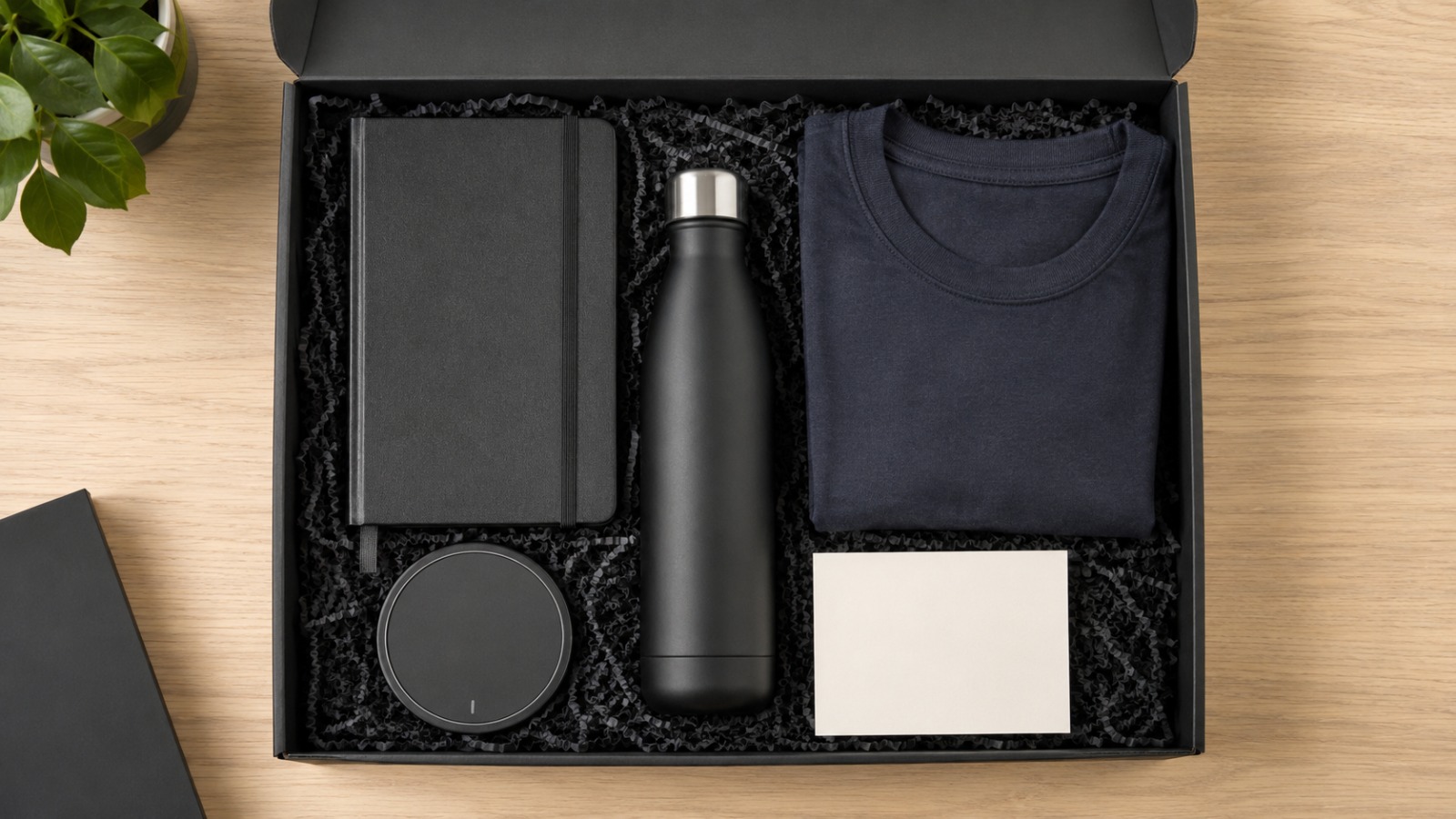
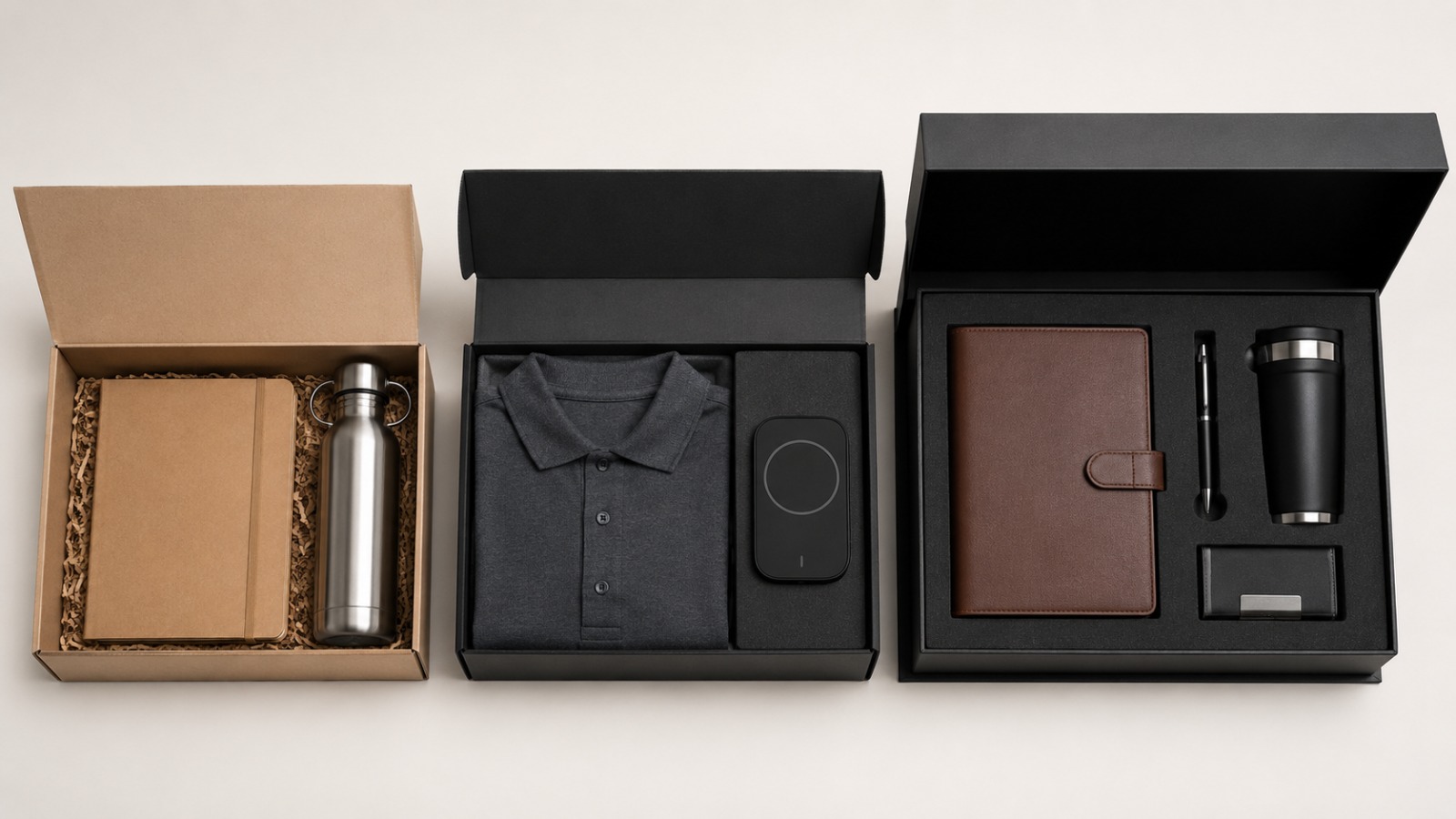
Every year the same thing happens: the festive calendar feels far away in August, and then suddenly it’s three weeks to Diwali, the per-head budget hasn’t been approved, and the gifts still have to reach four office locations on time. If you’re the one responsible for corporate Diwali gifting this year, this guide is built to save you that scramble — what to give by budget, how to brand it, how bulk ordering and multi-city delivery actually work, the tax rules that changed in 2026, and exactly when to place the order so you’re not caught in the peak crunch.
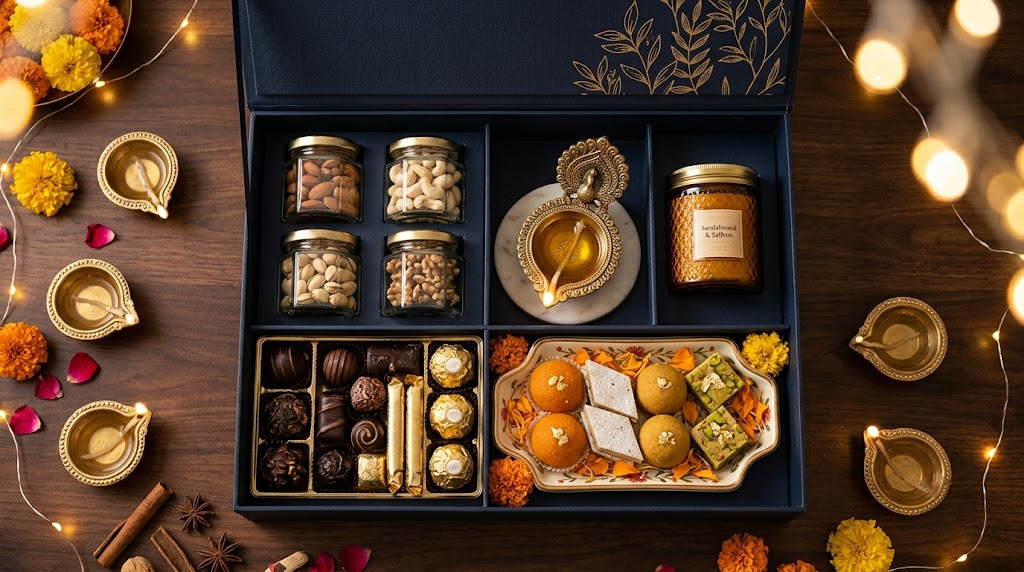
Why Diwali is the biggest corporate gifting window of the year
Diwali isn’t just another occasion on the gifting calendar — for most Indian companies it’s the occasion. The festive season concentrated around September and October drives the single largest wave of corporate gifting spend in the year, far outweighing New Year, work anniversaries, or onboarding combined. It’s when companies thank employees for the year, strengthen client relationships, and make sure partners feel valued going into the next cycle.
That concentration is exactly why planning early matters. Demand spikes hard in this window, which means the suppliers with the best hampers book out their production capacity weeks in advance. The teams that decide their budget and lock their order early get the better products, the cleaner branding, and on-time delivery. The teams that wait get whatever’s left — at a premium, in a rush. More on timelines below, but treat this as the headline: Diwali gifting is a “decide in August” job, not an “order in October” one.
Diwali gifts for employees, by budget
The right gift depends entirely on your per-head budget, so decide the budget first and then build to it. Here’s how the tiers typically break down, and what works at each.
Under ₹500 per head
This is the high-volume tier — large teams, factory staff, broad distribution. It works better than people expect because bulk pricing does the heavy lifting: an item that retails around ₹600 can often land under ₹500 per head once you’re ordering in larger quantities. Good options here are dry-fruit jars, a sweets box, a diya-and-candle set, or a quality branded mug or bottle paired with a festive card. The rule at this price is to pick one thing that feels solid rather than three things that feel flimsy.
₹500–₹1,000 per head
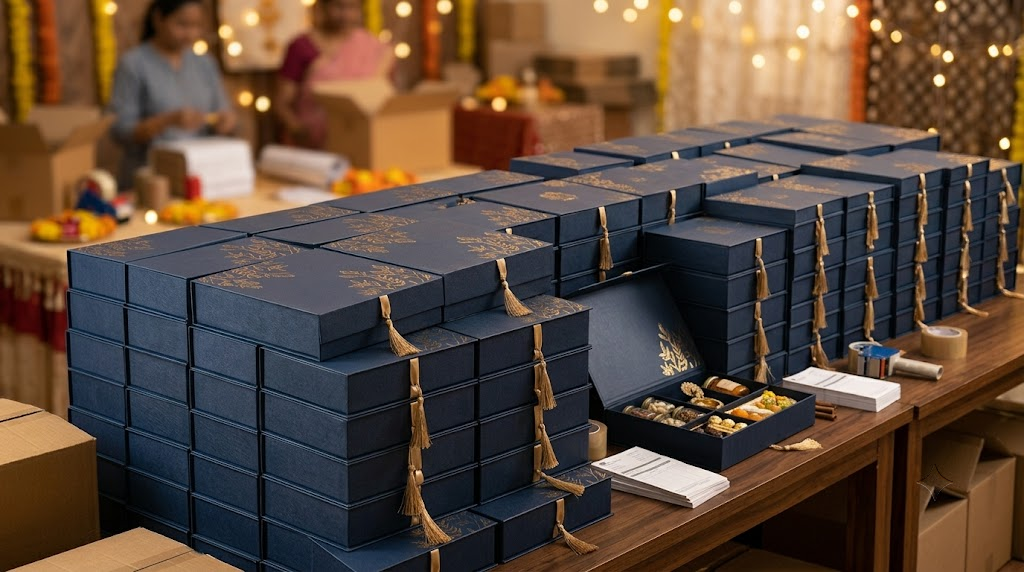
The most common employee tier for full-time staff. This is where the mixed hamper comes in — typically a combination of dry fruits, chocolates, and a candle or small festive item, presented in proper branded packaging. The packaging does real work at this level: the same contents in a rigid printed box versus a plain pouch is the difference between “a gift” and “a giveaway.”
₹1,000–₹2,000+ per head
The premium employee tier, often used for managers, senior staff, or company-wide when the budget allows. Here you’re into curated dry-fruit and gourmet hampers — better-grade nuts, premium chocolates, gourmet add-ons, and a more substantial box. CorGifting’s most reordered hamper at this level sits around [[SIGNATURE_HAMPER]], which gives you a sense of where the sweet spot lands for companies that want premium without going bespoke.
Diwali gifts for clients and partners
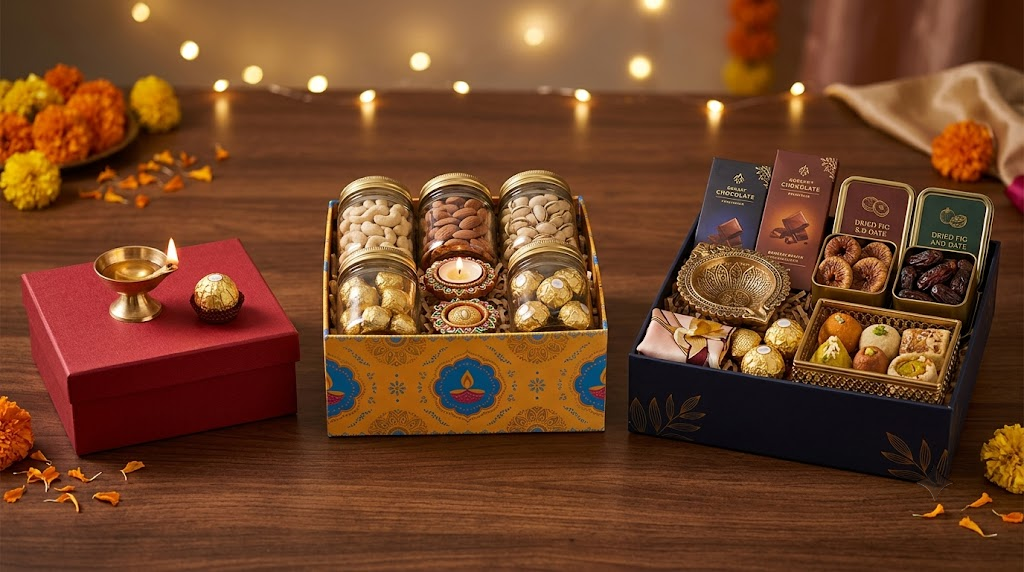
Client and partner gifting plays by different rules. The audience is smaller, the relationship stakes are higher, and the gift represents your company directly — so this is where you spend up. Think higher-value curated hampers, regional gourmet selections, and leadership-grade boxes for key accounts and CXO-level relationships, where the range can run up to [[CXO_RANGE]].
The framing that matters here: a client gift isn’t a thank-you, it’s a relationship investment. A generic hamper says “you’re on our list.” A considered, well-presented gift — ideally with a personal note from the relationship owner — says “you matter to us specifically.” For your top accounts, that distinction is worth the extra spend.
Customisation and branding for Diwali
Branding is what turns a bought gift into your company’s gift. The standard options scale from a logo on the box and a custom-printed greeting card, up to branded chocolates and per-recipient name printing for premium and client gifts.
What works especially well for Diwali is leaning into the festival rather than just stamping a logo on a generic box. Cultural motifs — Madhubani, Warli, or rangoli-inspired designs on the packaging — feel intentional and seasonal in a way a plain corporate box never will. For client and leadership gifts, adding the recipient’s name to the box or card is the small touch that lifts the whole thing. As with any branding, restraint reads as premium: a beautifully designed festive box with one clean logo placement beats a box covered in branding.
Bulk ordering and multi-location delivery
This is where Diwali gifting gets operationally tricky, because most companies aren’t shipping to one address — they’re shipping to several offices, plus remote employees, plus clients across the country.
CorGifting’s minimum order for Diwali hampers is [[MOQ]] boxes, with per-head pricing improving as quantity rises. The piece that saves HR and admin teams the most stress is multi-location, single-invoice delivery: hampers dispatched to multiple office addresses pan-India, and directly to remote employees’ and clients’ home addresses where needed, all under one order and one invoice rather than a dozen separate shipments to reconcile. Collect every delivery address early — chasing addresses in the final week is the number-one cause of Diwali gifts arriving late.
When to order — don’t get caught in the peak crunch
Here’s the honest timeline, because this is the mistake that ruins Diwali gifting every year.
Ideal: book 8–12 weeks ahead. Custom hampers with branded packaging need design approval, sourcing, production, and assembly, and the best suppliers fill their festive capacity early. Booking in this window gets you first pick of products and calm, on-time delivery.
Workable: 4–6 weeks ahead. Still fine for most standard hampers, though customisation options narrow as you get later.
Absolute minimum: 2–3 weeks. Possible for simpler, less-customised gifts, but you’re now competing for the last of the production capacity, with limited choice and no room for error.
The short version: if you’re reading this and Diwali is more than six weeks away, you’re in good shape — lock your budget and order now. If it’s closer, move today.
Tax and GST on Diwali corporate gifts
A genuinely useful thing to understand before you set your budget — and the rules changed in 2026, so older guides will steer you wrong. (This is general information, not tax advice — confirm the specifics with your finance team or CA.)
Income tax (gifts to employees): Non-cash gifts from an employer to an employee are exempt up to ₹15,000 per employee per financial year for FY 2026-27 — raised from the old ₹5,000 limit under the Income Tax Rules 2026, and this applies under both the old and new tax regimes. So a hamper, voucher, or item up to ₹15,000 is tax-free in the employee’s hands. Beyond that, the excess becomes a taxable perquisite (your finance team should confirm the exact treatment for your case). Important: this applies to non-cash gifts only — cash and cash-equivalent bonuses are fully taxable as salary regardless of amount.
GST: Gifts to an employee up to ₹50,000 per employee per financial year are generally not treated as a supply, so no GST applies. Above ₹50,000 per employee, GST treatment kicks in. Input tax credit on gifts is also restricted, so leave the GST and ITC handling to your finance team — but the ₹50,000 line is the one to keep in mind when budgeting premium gifts.
The practical takeaway: for the vast majority of employee gifting, you’re comfortably inside both limits, and the raised ₹15,000 income-tax exemption gives you more room than you had last year.
Get a Diwali bulk quote from CorGifting
CorGifting designs and produces customised Diwali hampers and corporate gifts from its Surat base — employee hampers across every budget tier, premium client and CXO gifting, festive branding, and multi-location delivery across India under a single order.
Because festive capacity books out early, the smart move is to lock your order ahead of the rush. Share your headcount (employees and clients), your per-head budget, and your delivery locations, and you’ll get a hamper recommendation and quote back. Message CorGifting on WhatsApp or request a Diwali bulk quote to book your early-bird slot.
Frequently asked questions
What are good Diwali gifts for employees under ₹500? Dry-fruit jars, a sweets box, a diya-and-candle set, or a quality branded mug or bottle with a festive card all work well at this price. Bulk pricing often brings items that retail around ₹600 under ₹500 per head when you order in larger quantities.
How early should we order corporate Diwali gifts in bulk? Ideally 8–12 weeks ahead, because festive production capacity fills up early and customisation takes time. Four to six weeks is workable for standard hampers; two to three weeks is the absolute minimum and limits your choices.
What is the minimum order quantity for Diwali hampers? It varies by supplier and customisation level. CorGifting’s minimum for Diwali hampers is [[MOQ]] boxes, with per-head pricing improving at higher volumes.
Are Diwali gifts to employees taxable in India? Non-cash gifts are tax-free up to ₹15,000 per employee per financial year for FY 2026-27 (raised from ₹5,000), under both tax regimes. Above that, the excess is a taxable perquisite. Cash gifts are always taxable. Confirm specifics with your finance team.
Can hampers be branded and shipped to multiple office locations? Yes. Hampers can carry your logo, custom cards, and festive designs, and be shipped to multiple office addresses and individual home addresses across India — typically under a single order and invoice.
What’s a typical per-employee Diwali gifting budget for Indian companies? It ranges widely by company and role, but common tiers are under ₹500 for large-volume staff gifting, ₹500–₹1,000 for full-time employees, and ₹1,000–₹2,000+ for premium or managerial gifts. Client and CXO gifts run higher.