
A new hire’s first day tells them, in about ten minutes, how seriously your company takes its people. An empty desk and a login email send one message. A thoughtful welcome kit waiting for them sends another. If you’ve been asked to “standardise the onboarding kit” for new joiners and you’re staring at a blank list, this guide walks through exactly what to include, what to spend per head, and how the bulk side actually works — written from the supplier side of the table, so you know what’s realistic before you ask for quotes.
What an employee onboarding kit really is (and why it’s not just swag)
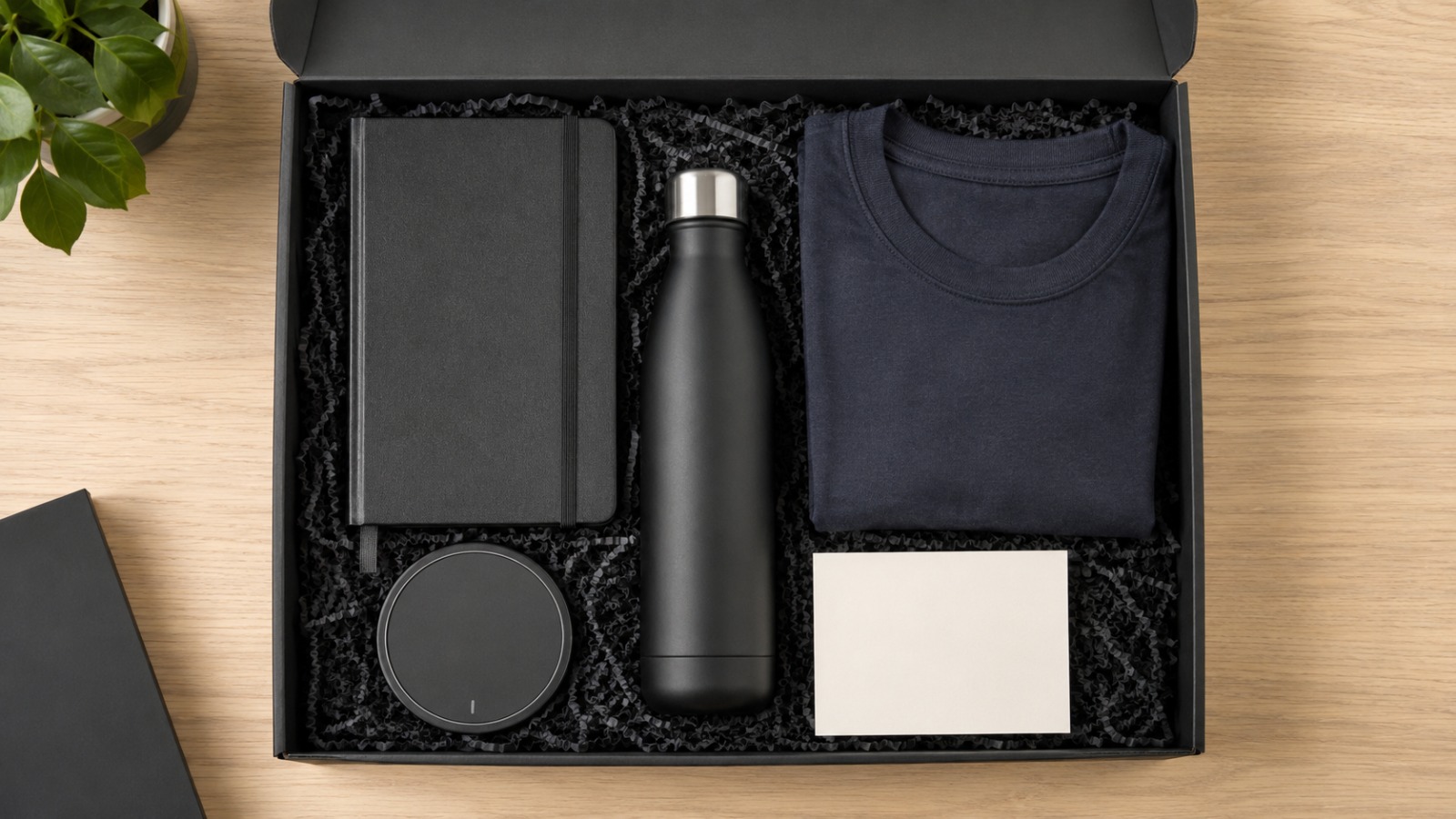
An onboarding kit — also called a welcome kit, joining kit, or new-joinee kit — is the set of branded items a company hands a new employee on or before day one. But the useful way to think about it isn’t “company merchandise.” It’s the first physical proof of your employer brand.
A new hire has usually spent weeks deciding whether to leave their old job for yours. The kit closes that loop. It signals belonging before they’ve sent a single email, it makes the team look organised and established, and — for remote hires especially — it turns an abstract “new job” into something real that arrives at their door. Companies that get this right see it pay off in early engagement and in how new joiners talk about their first week. It’s a small spend that does quiet, long-term work on culture and retention.
What to put in a welcome kit — by budget tier
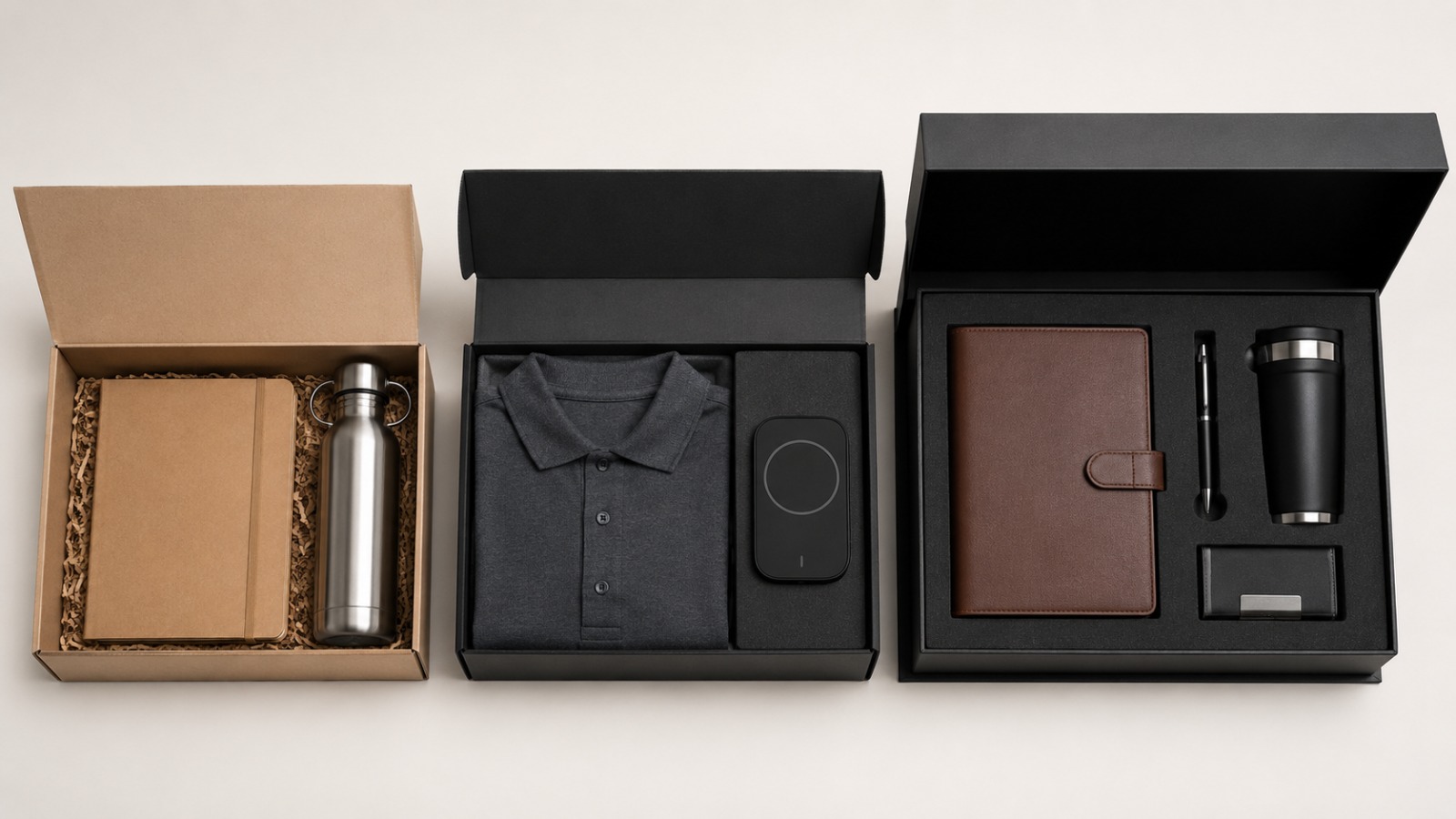
There’s no single correct kit. The right contents depend on your per-head budget and the role. Most Indian corporate gifting suppliers structure kits into three tiers, and it helps to decide your tier first, then fill it.
Common items across all tiers: a branded notebook or diary, a quality water bottle, apparel such as a T-shirt or hoodie, a tech accessory (wireless charger, mobile stand, power bank), a tote bag or laptop sleeve, a small snack box, and a personalised welcome note. You don’t need all of them — you need the right few for your budget.
Starter kit — roughly ₹300–₹800 per head
The essentials, done well. Typically a branded notebook, a pen, a water bottle, and a personalised welcome card in simple branded packaging. This tier works for high-volume hiring (think batch onboarding of interns or entry-level roles) where you’re ordering in large numbers and need to keep the per-head cost tight. The trick at this price is to spend on one item that feels good in the hand — usually the bottle — rather than spreading thin across cheap filler.
Standard kit — roughly ₹800–₹2,000 per head
The most popular tier for full-time corporate hires. You keep the starter items and add apparel (a T-shirt or hoodie), one useful tech accessory, and proper branded packaging — a rigid box rather than a polybag. This is the level where the kit starts to feel like a gift rather than a handout. For most companies standardising their onboarding, this is the sweet spot.
Premium / leadership kit — roughly ₹2,000–₹4,000 per head
For senior hires, leadership, or roles where the first impression carries weight. Think a genuine leather diary, premium drinkware, a quality tech item, and a curated box with a hand-signed note. Lower volume, higher impact. The packaging and unboxing experience matter as much as the contents here.
Branding and customisation options
Branding is what separates a welcome kit from a random gift, and the options scale with budget. The basics are logo printing or embroidery on apparel, bags, and notebooks. A branded box and a printed insert card pull the whole kit together visually.
The single highest-impact upgrade is personalisation — printing the new employee’s name on the diary, bottle, or welcome card. It typically adds only a small amount per unit but changes how the kit feels entirely: a generic branded mug is swag, the same mug with the person’s name on it is a gift they keep on their desk. If you have budget for one upgrade beyond your tier, make it personalisation.
A word of restraint, though: don’t put your logo on every single item. A kit where the bottle, bag, notebook, pen, and box all scream the company name feels like a billboard, not a welcome. Brand two or three hero items well and leave the rest clean.
How bulk ordering actually works
This is where HR teams get surprised, so here’s the real mechanics.
Minimum order quantity (MOQ): Most suppliers set a minimum, because customisation involves setup costs. CorGifting’s MOQ is [[MOQ]] units. Below that, per-unit costs rise sharply.
Volume pricing: Per-head cost drops as quantity rises. Meaningful wholesale pricing typically begins around [[VOLUME_BREAK]] units — so if you hire in batches, ordering for a quarter at once usually beats ordering per joiner.
Lead time: Custom kits aren’t off-the-shelf. Branding, sourcing, and assembly take time — typically [[LEAD_TIME]] working days from approval to dispatch. The most common HR mistake is ordering too late for a batch joining date; plan backwards from the start date, not forwards from when you remembered.
Shipping: Kits can go to a single office for in-person handover, or ship directly to individual employees — which matters more than ever for distributed teams.
Onboarding remote and multi-city teams
If your new hires are spread across cities or working from home, the office-handover model breaks down. The fix is direct-to-doorstep shipping: kits dispatched to each employee’s home address so they arrive on or before day one.
The operational piece HR underestimates is address collection. Build it into your offer-acceptance flow — collect the shipping address, apparel size, and any name-personalisation detail at the same time you collect documents, not in a scramble the week before joining. A simple form sent with the offer letter saves a lot of last-minute chasing.
Common mistakes HR teams make
A few patterns we see repeatedly, all avoidable:
Over-branding. Covered above — logo on everything cheapens the kit. Low-utility items. Stress balls, branded keychains, and gimmicks get thrown away; a good bottle or charger gets used daily and keeps the brand in view. No apparel sizing. Ordering all-medium T-shirts guarantees half your kits don’t fit — always collect sizes upfront. Ordering too late. Custom production takes real time; a kit that arrives in week three has missed its whole purpose. Confusing cheap with cost-effective. The lowest quote often means lower-grade items that reflect badly on you the moment the employee handles them.
How CorGifting handles onboarding kits at scale
CorGifting produces customised onboarding and welcome kits for companies from its Surat manufacturing base, with flexibility on contents, branding, and order size. Whether you’re outfitting a batch of new joiners or building a standard kit for ongoing hiring, the kit can be matched to your per-head budget and shipped to a single office or to employees’ home addresses across India.
To get a quote for your team size and budget, reach out on WhatsApp or send a bulk inquiry. Share your headcount, target per-head budget, and joining timeline, and you’ll get a kit recommendation back.

Frequently asked questions
What should be included in an employee welcome kit? At minimum, a branded notebook, a quality water bottle, and a personalised welcome note. Mid-range kits add apparel, a tech accessory, and proper packaging; premium kits add items like a leather diary and curated drinkware. Choose contents to match your per-head budget rather than trying to include everything.
How much does an onboarding kit cost per employee in India? Kits generally fall into three tiers: roughly ₹300–₹800 for essentials, ₹800–₹2,000 for a standard full-time hire kit, and ₹2,000–₹4,000 for premium or leadership kits. Per-head cost drops with larger order volumes.
What is the minimum order quantity for branded welcome kits? It varies by supplier because customisation carries setup costs. CorGifting’s minimum is [[MOQ]] units. Ordering in larger batches generally lowers the per-head price.
How long does it take to produce and deliver bulk kits? Custom kits typically take [[LEAD_TIME]] working days from design approval to dispatch, depending on branding complexity and quantity. Plan your order backwards from your joining date.
Can welcome kits be shipped to remote employees’ home addresses? Yes. Kits can be dispatched directly to individual home addresses across India, which is the standard approach for distributed and work-from-home teams. Collect addresses and apparel sizes at the offer stage.
Can we add our company logo and the employee’s name? Yes — logo printing or embroidery is standard, and adding the employee’s name to items like the diary, bottle, or welcome card is a small upgrade that significantly raises how personal the kit feels.


